Site Announcement
Sign up today and receive company updates straight to your inbox
Sign up today and receive company updates straight to your inbox


As the Director of Nuclear Analysis for Deep Fission, Aleem E. Boatright, PE, brings more than 25 years of leadership in nuclear safety analysis, reactor licensing, and regulatory oversight across the full breadth of the U.S. nuclear enterprise. His career reflects sustained responsibility for safety-critical systems and high-consequence decisions affecting billions of dollars in nuclear assets, with work trusted by both commercial operators and federal regulators.
Aleem’s technical expertise spans design basis accident (DBA) analysis, shielding design, source term development, and the evaluation of safety systems for light-water and advanced reactor technologies. He has engineered nuclear safety solutions for major utilities including DTE, PSE&G, and Constellation, and supported reactor and facility design efforts at organizations such as GE, Mitsubishi, and Idaho National Laboratory. During these engagements, he has successfully implemented NRC Regulatory Guide 1.183 “alternative source term” methodologies in nearly 100 nuclear safety analyses, reflecting deep familiarity with both analytical rigor and regulatory expectations.
A defining achievement of Aleem’s career is the development of novel aerosol radioactivity deposition modeling techniques that were formally approved by the U.S. Nuclear Regulatory Commission in 2023 for use throughout the commercial nuclear power industry. This first-of-a-kind regulatory approval places his work among a small set of safety methodologies endorsed for broad industry application and underscores his credibility as both a technical authority and a regulator-trusted practitioner.
In addition to commercial work, Aleem has held senior technical responsibilities within the NRC and the U.S. Department of Energy. At the NRC, he evaluated analyses supporting reactor licensing requests and contributed to revisions of regulatory policy governing DBA analysis. At the DOE, he led independent oversight of nuclear safety, engineering, and safety basis analyses for non-power reactors and dozens of high-hazard nuclear facilities across the DOE enterprise. He is a licensed Professional Nuclear Engineer and holds a B.S. in Nuclear Engineering from The Pennsylvania State University.


As Licensing Engineer at Deep Fission, Rebecca Bost brings more than a decade of experience navigating U.S. nuclear regulatory frameworks and supporting the approval of advanced reactor technologies. Her work centers on aligning complex engineering programs with Nuclear Regulatory Commission (NRC) and Department of Energy requirements, ensuring that technical designs are translated into licensable, regulator-ready documentation and schedules.
Rebecca has held licensing supervisory roles during the NRC certification of a 10 CFR Part 52 Design Certification Document, as well as serving as lead licensing planner for NRC approval of a Part 52 Standard Design Approval. She has been directly engaged with the processes that govern reactor licensing in the United States, reinforcing a foundation of regulatory trust and procedural rigor.
Earlier in her career, Rebecca operated a TRIGA research reactor at the University of Texas as a Senior Reactor Operator, and later served in nuclear operations roles within the U.S. Navy aboard the USS Louisiana, a nuclear-powered ballistic missile submarine. These positions required disciplined execution, conservative decision-making, and strict adherence to nuclear safety culture; experience that continues to inform her regulatory perspective.
Rebecca brings 15 years of experience across commercial nuclear licensing, defense-related reactor operations, and regulatory planning. She holds a Project Management Professional (PMP) certification and remains focused on advancing nuclear energy as a reliable, climate-focused baseload solution within a credible and regulator-aligned framework.
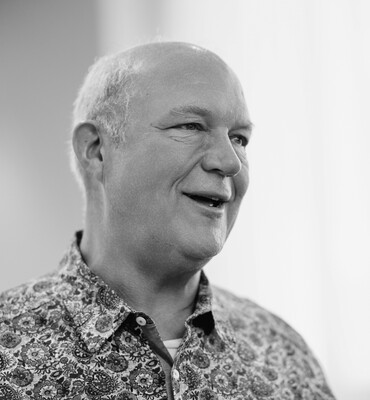

As Director of Licensing at Deep Fission, Mark Chitty leads regulatory licensing strategy for advanced reactor deployment and supports alignment between engineering development and Nuclear Regulatory Commission requirements. His work focuses on translating complex reactor designs into licensable, regulator-ready programs informed by decades of operational and regulatory experience across the nuclear industry.
Mark brings 30 years of experience spanning naval nuclear operations, federal regulatory oversight, and commercial nuclear power development. He began his career in the United States Navy Nuclear Propulsion Program, serving aboard nuclear-powered submarines and qualifying to operate eight different nuclear plants. Over more than two decades of naval service he supported reactor operations, maintenance, training, new construction, and decommissioning activities, ultimately retiring as a Master Chief Petty Officer and “Bull Nuke.” This operational background provides a foundation in nuclear safety culture, disciplined procedures, and reactor plant accountability.
Following his naval career, Mark served with the U.S. Nuclear Regulatory Commission as an Operations Engineer and Resident Inspector, gaining direct experience with licensing reviews, plant inspections, and regulatory oversight from the regulator’s perspective. He later supported commercial nuclear development efforts, including work at Southern Company on the Vogtle Units 3 and 4 project, where he led the licensing effort in achieving the nuclear industry's first Commission Approved Simulator (CAS) supporting the first AP1000 reactor units constructed in the United States. At NuScale Power he advanced licensing strategies for small modular reactor deployment, including development of a barrier-based approach for protection against turbine missiles, another industry first.
Mark’s experience across naval operations, federal oversight, and commercial nuclear development provides a comprehensive perspective on reactor licensing and regulatory readiness. His work at Deep Fission supports the development of credible licensing pathways for next-generation nuclear systems operating within established regulatory frameworks.
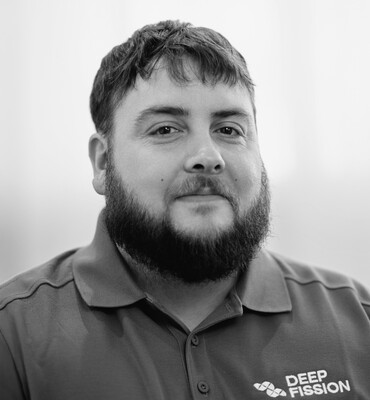

As Reactor Operator at Deep Fission, Dustin Lee Cluck brings more than a decade of hands-on responsibility for safety-critical nuclear operations in highly regulated environments. His background reflects direct accountability for plant operations and disciplined execution in contexts where regulatory compliance, procedural rigor, and operational trust are paramount.
Dustin’s experience is grounded in nuclear operations and reactor safety, with leadership roles that require continuous attention to system integrity, operational readiness, and adherence to nuclear safety culture. He has worked in environments where operators are entrusted with real-time decision-making authority over complex systems, reinforcing conservative judgment and precision under pressure. His operational focus supports the safe advancement of nuclear systems from development through execution.
In addition to commercial nuclear operations, Dustin’s career includes service within military and national security–related programs, further strengthening his foundation in the standards and expectations of the Naval Nuclear Program. This experience reinforces a deep respect for procedure, accountability, and regulatory trust—qualities that are essential for operating and deploying advanced nuclear technologies responsibly.
Dustin brings 11–20 years of experience across nuclear energy and defense-related environments. His work at Deep Fission contributes an operations-first perspective focused on safety, compliance, and reliability as the company develops and prepares to deploy next-generation nuclear systems.


As Vice President of Regulatory Strategy at Deep Fission, Rani Franovich leads the company’s engagement with U.S. nuclear regulatory frameworks, shaping licensing pathways, safety strategy, and regulatory modernization efforts for advanced reactor deployment. With more than 30 years of experience at the U.S. Nuclear Regulatory Commission (NRC), she brings rare, system-level insight into how regulatory oversight, enforcement, safety culture, and environmental review intersect in practice.
Rani’s public service career at the NRC included qualification as an inspector and six years as a resident inspector at Catawba Nuclear Station, where she developed integrated, operational knowledge of plant systems and regulatory oversight. She later served in senior leadership and policy roles, contributing to inspection, licensing (safety and environmental reviews), enforcement, emergency preparedness, nuclear security, allegations programs, and organizational culture transformation. She was also a member of the NRC’s response team following the Fukushima Daiichi nuclear accident in 2011, contributing to the agency’s evaluation and modernization efforts in its aftermath.
Recognized as an expert in risk-informed, performance-based (RIPB) regulation, Rani has actively influenced national and international regulatory dialogue. In 2022, she proposed an alternative conceptual RIPB framework to inform NRC language under development for 10 CFR Part 53. She has spoken extensively at Regulatory Information Conferences, advanced reactor forums, ANS working groups, and most recently at an International Atomic Energy Agency technical meeting in Vienna focused on licensing of new technologies and regulatory readiness. In addition to her role at Deep Fission, she is founder of Nuclear ROSE Consulting, providing expert witness services and advisory support on reactor safety, security, and regulatory oversight.
Rani holds a Master of Science in Industrial and Systems Engineering and a Bachelor of Science with double majors in Psychology and English from Virginia Tech, along with certification as an NRC inspector of pressurized water reactors. Her work reflects a career dedicated to regulatory trust, institutional modernization, and the responsible advancement of nuclear energy.


Tim Gnadt serves as Senior Nuclear Operations Engineer at Deep Fission, bringing experience from licensed nuclear facilities and safety-critical operations in both commercial power generation and the U.S. Naval Nuclear Power Program. His work has centered on operating, supervising, and responding to plant conditions where safety, regulatory compliance, and disciplined decision-making are essential.
In the world of operating nuclear reactors, success is when nothing happens. Throughout his career, Tim has a flawless track record of ensuring his control room teams were prepared for unexpected events. When significant plant transients occurred—including Technical Specification-mandated power reductions and reactor trips triggered by steam system events—that preparation mattered. His teams were able to respond effectively, coordinate across engineering and operations, and maintain adherence to regulatory and procedural controls to keep the plant safe.
His service in the Naval Nuclear Power Program established a foundation in nuclear safety culture, procedural discipline, and mission-focused execution. Across both military and civilian contexts, he has worked in highly regulated environments where operational excellence, conservative decision-making, and system-level awareness are necessary. This background supports his current work at Deep Fission, where he contributes to the operational and safety considerations required to deploy next-generation nuclear systems responsibly.
Tim held a Senior Reactor Operator (SRO) license and has more than two decades of experience across nuclear operations, power generation, and capital-intensive energy systems. He also holds an MBA, complementing his technical background with organizational leadership capabilities.


As Senior Reactor Operator at Deep Fission, David Green brings deep operational responsibility for safety-critical nuclear systems, informed by hands-on leadership in licensed plant operations, lifecycle management, and government-supported nuclear research initiatives. His experience reflects sustained accountability in environments where operational precision, regulatory compliance, and national security considerations are inseparable.
David’s background spans commercial nuclear operations and defense-related nuclear programs, with direct involvement in plant operations, decommissioning activities, and first-of-a-kind testing efforts. He has held leadership roles in safety-critical contexts that require disciplined execution and conservative decision-making, particularly in facilities operating under stringent regulatory and procedural controls. His work emphasizes operational readiness, system reliability, and adherence to nuclear safety culture.
A defining contribution of David’s career was serving as testing lead for a collaborative, first-of-its-kind nuclear test conducted jointly by Los Alamos National Laboratory and Sandia National Laboratories in support of National Nuclear Security Administration (NNSA) objectives. This test established a new benchmark for subsequent experimental series, reflecting both technical rigor and the trust placed in his operational leadership within highly classified, mission-critical environments.
David’s experience also includes service connected to military and national security programs, grounding his approach in the standards of the Naval Nuclear Program and reinforcing a strong foundation in procedural discipline and reactor operations. He brings 16 years of experience across nuclear power generation, government and regulatory environments, and defense-related programs, contributing an operations-driven, research-informed perspective to Deep Fission’s development of next-generation nuclear systems.


As Senior Nuclear Engineer at Deep Fission, Laura Holewa contributes to reactor physics analysis and advanced reactor design supporting the development of Deep Fission’s underground nuclear power system. Her work focuses on neutronics modeling, sensitivity and uncertainty analysis, and the evaluation of core physics behavior for compact reactor designs operating under demanding safety and performance requirements.
Laura brings 8 years of experience in nuclear engineering research, simulation, and applied reactor design. Her technical work centers on advanced reactor neutronics and nuclear data analysis, using modeling tools such as Serpent, SCALE, and MCNP to evaluate reactor core behavior and safety margins. She also develops custom computational tools using Python to support analysis workflows and improve the efficiency and reliability of reactor design calculations.
Prior to joining Deep Fission, Laura performed reactor core simulations and neutronics analysis for next-generation reactor systems, including work on a molten salt reactor concept at SaltFoss Energy and on the eVinci microreactor at Westinghouse. These roles involved evaluating reactor performance, modeling nuclear interactions within the core, and supporting early-stage development of first-of-a-kind reactor technologies. Her work contributes to the technical foundation required for advanced reactor licensing and deployment.
Laura holds a Master of Science in Nuclear Engineering from Texas A&M University and has contributed to peer-reviewed publications related to nuclear instrumentation and applied reactor research. Her work at Deep Fission supports core physics design, proposal development, and the advancement of compact nuclear systems optimized for safety, scalability, and long-term autonomous operation.




As Principal Instrumentation and Controls (I&C) Engineer at Deep Fission, John McClure brings 18 years of leadership in safety-critical power and control systems spanning nuclear power, oil and gas, and grid-connected renewable energy. His work centers on designing, deploying, and governing high-reliability instrumentation and electrical systems in environments where failure is not an option.
John’s experience includes direct responsibility for nuclear reactor operations and the development of safety-critical electronics across multiple energy sectors. He began his career in the U.S. Navy’s nuclear propulsion program, establishing a strong foundation in nuclear operations, disciplined procedures, and high-reliability power systems. He later spent a decade in the oil and gas sector, where he led research and development of downhole electronics designed to operate in extreme pressure and temperature conditions, ultimately serving as Vice President of Engineering for an oilfield services company.
In addition to nuclear and oil and gas work, John has led first-of-a-kind energy system deployments in the renewable sector, serving as Chief Engineer of a solar energy startup. In this role, he oversaw electrical power system design, operations, and business development for grid-connected utility projects, bridging technical execution with commercial outcomes. He is a named inventor on a patent related to downhole tools for oil and gas exploration, reflecting a sustained focus on innovation in harsh, high-consequence operating environments.
John is a licensed Professional Engineer in Electrical Engineering, registered in California, Hawaii, and Texas. He holds a Bachelor of Science in Engineering Technology from the University of Houston and an MBA from Sam Houston State University. His background across defense, nuclear, fossil, and renewable energy systems brings a system-level perspective to instrumentation and control challenges at Deep Fission.


As Senior Licensing Engineer at Deep Fission, Ty C. Mullen contributes to reactor safety and licensing strategy for advanced nuclear systems operating within complex regulatory environments. His work focuses on integrating technical analysis, systems thinking, and program execution to support the development of licensable reactor designs and regulator-ready documentation.
Ty brings 30 years of experience across nuclear engineering, regulatory analysis, advanced technology development, and program leadership. His career has included roles as a senior technical consultant, program manager, product development leader, and safety analysis engineer, working across energy, government, and industrial technology sectors. He has led interdisciplinary teams responsible for developing engineering solutions, managing large-scale technical initiatives, and translating complex system insights into actionable program strategies.
His background includes work supporting first-of-a-kind technology deployments and large engineering programs that require coordination among engineering, regulatory, software development, and operational teams. Ty’s expertise combines engineering analysis with data-driven decision frameworks, including quantitative and qualitative analytics, systems analysis, human factors engineering, and evidence-based management approaches. This multidisciplinary perspective supports the development of licensing strategies that align technical performance with regulatory expectations.
Ty holds a Doctor of Management, a Master of Science in Management of Information Technology, and a Master of Science in Health Administration Informatics, along with a Bachelor of Science in Engineering Mechanics. He also holds Project Management Professional (PMP) and Certified Scrum Master (CSM) certifications. His work at Deep Fission contributes a systems-oriented approach to regulatory readiness and advanced reactor deployment.


Pradeep Pandurangan serves as an FEA Mechanical Engineer at Deep Fission, where he supports research and development through advanced mechanical analysis, simulation, and safety-critical engineering evaluations. His work focuses on finite element analysis, structural dynamics, and thermohydraulic modeling in support of Deep Fission’s nuclear development program.
Pradeep brings nearly two decades of industry experience across the nuclear and oil & gas sectors, including senior engineering roles at Framatome and NOV prior to joining Deep Fission. He has contributed to technical publications and is a named inventor on patented technologies. Pradeep holds a PhD in Mechanical Engineering from North Carolina State University and is a licensed Professional Engineer in Texas.


As Engineering Program Manager at Deep Fission, Emily Piper leads the development and implementation of an NQA-1–compliant quality assurance framework across engineering operations. Her work focuses on establishing audit-ready systems that support reactor safety, regulatory compliance, and disciplined execution within a highly regulated nuclear environment.
Emily brings more than a decade of experience in the nuclear sector, with specialization in quality assurance, documentation control, and regulatory alignment. Prior to joining Deep Fission, she served as Operations Manager at Paragon Energy Solutions and Rock Creek Innovations, where she played a central role in establishing and maintaining a 10CFR50 Appendix B–compliant Quality Assurance Program. Her responsibilities included overseeing document control, records management, configuration management, and workforce training—foundational elements required to sustain licensable, regulator-trusted operations.
Her work is defined by precision, structure, and cross-functional coordination. Emily partners closely with engineering, regulatory, and quality assurance teams to ensure that technical progress is supported by robust processes and defensible documentation. She helps translate regulatory expectations into practical systems that scale with organizational growth, reinforcing a culture of accountability and continuous improvement. In fast-moving development environments, she provides the procedural discipline necessary to maintain long-term credibility.
Emily holds a Bachelor of Science in Business with concentrations in Finance and Economics from Baker University. She brings a balanced perspective that integrates operational rigor with collaborative leadership, contributing to Deep Fission’s ability to advance complex nuclear technologies within a compliant and quality-driven framework.


As Principal Nuclear Engineer at Deep Fission, Jason Pottorf brings more than 25 years of leadership in safety-critical nuclear systems, with deep responsibility for instrumentation and controls (I&C) architecture, system safety analysis, and reactor licensing in highly regulated environments. His work has shaped first-of-a-kind nuclear technologies and licensing outcomes that set precedents for the broader industry.
Jason’s expertise spans probabilistic risk assessment, system safety analysis, and the design and licensing of advanced safety instrumentation and digital reactor protection systems. He has led or contributed to I&C safety architecture and licensing efforts for multiple advanced reactor and nuclear facility programs, including NuScale Power, SHINE Technologies, X-Energy, and Kairos Power. His experience includes both commercial nuclear plant operations and next-generation reactor development, grounding his work in practical operational realities as well as forward-looking system design.
A defining achievement of Jason’s career is his role as a co-inventor of the Highly Integrated Protection System (HIPS), a novel digital reactor protection system. The associated Topical Report received the fastest approval by the U.S. Nuclear Regulatory Commission for a new digital reactor protection system—an uncommon distinction that underscores both the technical rigor and regulatory credibility of the work. Jason is a named inventor on the HIPS patent, and his contributions have helped establish new pathways for licensing modern digital safety systems in nuclear applications.
Earlier in his career, Jason served as Engineering Director at Paragon Energy Solutions and as a Nuclear Engineer at the Wolf Creek Nuclear Generating Station, giving him direct exposure to both system-level leadership and plant-based operations. He is a licensed Professional Nuclear Engineer in the state of Kansas and holds both B.S. and M.S. degrees in Nuclear Engineering from Kansas State University. His work reflects a system-level perspective focused on safety, licensability, and dependable performance in high-consequence nuclear environments.


As Supply Chain Director at Deep Fission, Jim Read brings more than 35 years of leadership across nuclear operations, major capital projects, and new nuclear start up environments. His work centers on sourcing and procurement of nuclear plant components for complex, capital-intensive projects where regulatory compliance, traceability, and quality assurance are essential.
Jim’s experience includes responsibility for supply chain strategy supporting multi-billion-dollar nuclear programs, including the procurement and qualification of safety-related components. He has operated in environments requiring rigorous adherence to nuclear standards, disciplined configuration management, and close coordination between engineering, manufacturing, and regulatory teams. His background spans plant-level operations and lifecycle management, reinforcing a practical understanding of how procurement decisions directly impact operational reliability and regulatory trust.
Additionally, Jim has supported first-of-a-kind nuclear technology deployments under government programs, bringing a structured and compliance-driven approach to supplier evaluation, contract management, and risk mitigation. His experience includes 22 years as a Naval Nuclear Submarine Officer where he served in multiple leadership roles in national security environments, grounding his leadership in the standards of the Naval Nuclear Submarine Program and reinforcing core values of integrity, courage and commitment.
Jim holds a Bachelor of Science in Mechanical Engineering and completed the Naval Nuclear Power Program. His decades of experience across nuclear power generation bring a balanced, systems-oriented perspective to building a resilient and regulator-ready supply chain foundation at Deep Fission.


As Scheduler at Deep Fission, Heather Roberson brings 25 years of project management and project controls experience supporting large-scale energy and nuclear initiatives. Her work centers on schedule integrity, risk visibility, and disciplined execution across complex, highly regulated programs where cost, compliance, and timeline alignment are critical.
Heather’s background includes deep expertise in cost estimating, scheduling, earned value management, performance reporting, and risk management for multi-million and multi-billion-dollar projects. She has operated within environments where regulatory oversight, safety culture, and financial accountability intersect, ensuring that program milestones are both technically sound and defensible from a compliance standpoint. Her approach emphasizes transparency, structured reporting, and early identification of execution risk.
A defining role in her career was serving as Lead Scheduler for the decommissioning of the Palisades nuclear power plant—an effort requiring precise coordination across engineering, regulatory, environmental, and operations teams. Decommissioning projects demand rigorous lifecycle management, long-term planning discipline, and strict adherence to regulatory and environmental requirements. Her leadership in this context reflects both system-level thinking and an ability to maintain schedule clarity under evolving conditions.
Heather brings more than two decades of experience across nuclear power generation, broader energy infrastructure, and technology-enabled project controls environments. Her work at Deep Fission supports the structured advancement of next-generation nuclear systems, ensuring that ambitious engineering goals are matched by credible, execution-ready planning frameworks.


Adam Rose is a multidisciplinary leader with over two decades of experience spanning nuclear operations, green power generation, systems engineering, quality assurance, and defense technology. With a track record of technical excellence and operational leadership, Adam brings deep insight and steady execution to the forefront of nuclear engineering innovation.
Prior to joining Deep Fission, Adam was the operations manager for Element Materials Technology, where he managed a team executing millions of dollars in qualification, testing, and supply for domestic and international nuclear power plants and manufacturers. Including the construction of a one-of-a-kind testing facility for SMR testing.
Adam is a licensed Senior Reactor Operator and holds a B.S. in Computer Science from Rensselaer Polytechnic Institute.


As Senior Thermal Hydraulic Engineer at Deep Fission, Brett Siebert leads thermal-hydraulic analysis and modeling efforts supporting the development of the company’s deep borehole reactor power plant. His work focuses on the analysis of reactor coolant systems, heat transport from the reactor to the surface, and steam generation cycles that convert thermal energy into electricity. Brett contributes to both steady-state and transient plant modeling, including analysis performed using the TRACE code to evaluate plant response under a range of operating conditions.
Brett brings 30 years of experience in nuclear engineering, fluid dynamics, and advanced simulation environments supporting reactor design and safety analysis. He spent the majority of his career at the Naval Nuclear Laboratory, where he served in roles culminating in Senior Advisor Engineer. His work centered on the development of high-fidelity computational tools used to evaluate nuclear reactor systems and full plant dynamics. These tools modeled complex interactions among thermal hydraulics, reactor physics, structural behavior, and material effects, enabling engineering teams to evaluate reactor performance under both normal and off-normal operating conditions.
Throughout his career Brett has led development of multiple first-of-a-kind simulation frameworks used for nuclear reactor analysis and advanced power plant concepts. His work includes development of two-phase boiling flow computational fluid dynamics codes, extension of Nuclear Regulatory Commission analysis software to model full power plant dynamics, and creation of multiphysics analysis tools linking reactor physics, thermal-fluid behavior, structural effects, and corrosion processes. He also contributed to analysis frameworks for advanced reactor concepts including space reactor systems for NASA’s Jupiter Icy Moon Orbiter program and supercritical CO₂ power cycles.
Brett is a named inventor on multiple patents related to thermal and fluid system performance and has authored several publications in engineering journals and conference proceedings focused on boiling flow modeling and reactor system simulation. He holds a Master of Engineering in Aerospace Engineering from Pennsylvania State University and a Bachelor of Science in Aerospace Engineering from Boston University, graduating summa cum laude.


Stephen Spears serves as Senior Nuclear Operations Engineer at Deep Fission, where he supports operational readiness, work control, and the disciplined execution required to deploy safety-critical nuclear systems. His work focuses on integrating operations, maintenance, and planning functions to ensure reliability and regulatory alignment in a developing reactor environment.
Stephen brings 35 years of experience across naval nuclear operations and commercial nuclear power, with a career grounded in hands-on plant leadership and operational accountability. He previously held a Senior Reactor Operator (SRO) license at Browns Ferry Nuclear Plant, where he was qualified on all three units and supported complex outage and maintenance activities. During five refueling outages, he served as a Test Senior Reactor Operator, overseeing complex, infrequently performed test evolutions and ensuring safe, controlled execution of critical plant activities.
His service in the United States Navy Nuclear Power Program established a strong foundation in nuclear safety culture, procedural discipline, and mission-focused execution. Over 21 years, he supported reactor operations and maintenance for nuclear-powered aircraft carriers, ultimately retiring as a Master Chief. He also qualified as a Senior Enlisted Leader and Master Training Specialist, reflecting deep experience in training, qualification programs, and workforce development.
In the commercial sector, Stephen held multiple leadership roles at Tennessee Valley Authority’s Browns Ferry Nuclear Plant, including Electrical Superintendent, Planning Manager, Assistant Maintenance Director, and Director of Work Control. In these roles, he led large organizations and was responsible for integrating maintenance and scheduling across continuous operations and refueling outage cycles.
His experience across military and commercial nuclear environments provides a practical, operations-focused perspective on reliability, safety, and execution. At Deep Fission, he contributes to the development of operational strategies and disciplined processes necessary to safely deploy next-generation nuclear systems.


Chris is passionate about promoting the advancement of nuclear power new build design and licensing. He has over 18 years of experience solving challenging engineering problems over various disciplines including power and process piping, pressure vessel design, thermal mechanical finite element analysis, and fluid structure interaction.
Chris started his career at Westinghouse Electric Company analyzing major components for the AP1000 pressurized water reactor with expertise in ASME Code analysis and Steam Generator internals flow induced vibration. He continued his career working at Nuclear Power Plants and Research Reactors in the United States and Europe, along with engineering positions in the process industry and consulting for Becht Engineering.
Chris received his undergraduate and master’s degree in mechanical engineering from Carnegie Mellon University.