Site Announcement
Sign up today and receive company updates straight to your inbox
Sign up today and receive company updates straight to your inbox
By Liz Muller, Co-founder and CEO, Deep Fission
Why Deep Fission built around the uranium powering the grid today
There's a fact about advanced nuclear that doesn't get said plainly enough:
Most next-generation reactor designs depend on fuel types that are used primarily in research, testing, and demonstration programs rather than commercial power generation.
High-assay low-enriched uranium (HALEU) and TRISO fuels are promising technologies, and they may very well play an important role in future of nuclear power. But today, outside of a handful of test and demonstration reactors, no commercial electricity anywhere in the world is generated with them. There is no at-scale enrichment capacity, no mature fabrication supply chain, no decades of licensing precedent. For the developers who depend on these fuels, an entire industrial ecosystem must be built before their first commercial kilowatt-hour can flow.
Now consider low-enriched uranium (LEU).
LEU is powering the global nuclear fleet right now — hundreds of reactors delivering enormous amounts of reliable, low-carbon electricity, 24/7. It has a more than 70-year history of development, improvement, and safe commercial operation. Every stage of its lifecycle — enrichment, fabrication, transportation, reactor operations, regulation — is supported by an established industrial base and decades of engineering and licensing experience.
This is a fuel exists at scale, while the others are still years away from it.
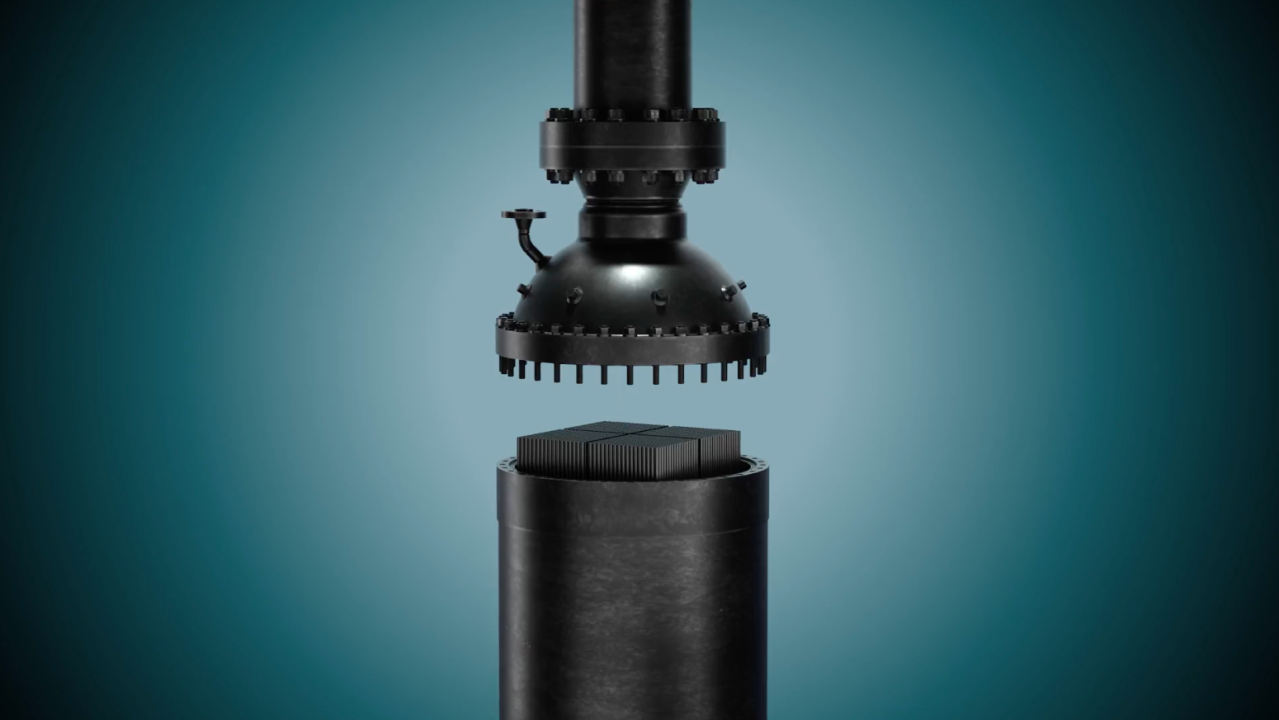
That contrast is why one of the earliest and most consequential decisions we made at Deep Fission was to design our Gravity™ Nuclear Reactor around commercially available LEU — the same fuel that has powered pressurized water reactors for generations.
It wasn't simply a fuel choice. It was a commercialization choice.
Speed comes from what already exists
I often say that the greatest challenge facing nuclear energy today isn't proving that it works. Nuclear has been delivering reliable, low-carbon electricity for generations. The challenge is deploying enough of it, quickly enough, to meet surging energy demand.
Against that challenge, every new dependency matters. A new fuel. A new enrichment pathway. A new fabrication process. A new supply chain that has to be financed, built, licensed, and scaled before a single reactor can run commercially. Sometimes that complexity is necessary to unlock genuinely new capabilities. But when the goal is delivering large amounts of power soon, the faster path is to build on what's already proven.
We asked ourselves a simple question: if there is a fuel with an established, operating supply chain already powering the world's reactors, why would we bet our deployment timeline on anything else?
Integration over invention
We aren't trying to reinvent every component of a nuclear power plant. We're deliberate about where innovation creates the greatest value — and where proven technology already provides the answer.
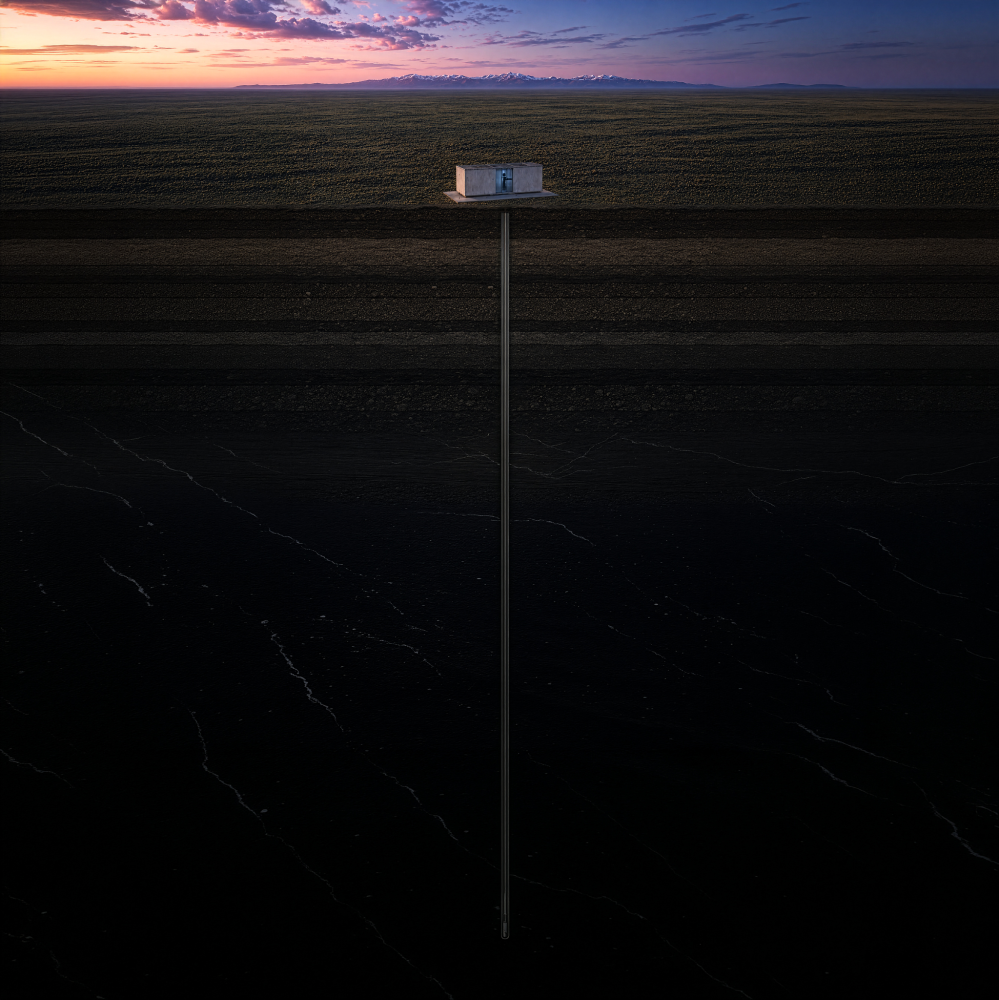
Our innovation isn't the fuel, and it isn't the reactor physics. It's the deployment architecture: pairing commercially available LEU with established pressurized water reactor technology and placing it a mile underground, where a billion years of geology does the work that concrete containment domes do on the surface.
Every proven component we leverage removes a hurdle — technical, regulatory, or industrial — that has historically slowed nuclear projects. And every hurdle we remove lets us concentrate our engineering effort where it actually differentiates us.
Built to be first — and built to scale
Choosing LEU means Deep Fission doesn't have to wait for a fuel supply chain to be invented. It exists, is operating, and can be contracted today.
That has two significant impacts that matter enormously for the market we're in.
First, it means we can build early. Our fuel doesn't sit on anyone's critical path.
Second — and just as important — it means we can scale. Because LEU production, fabrication, and transport already operate at global fleet scale, adding Deep Fission reactors draws on an industrial base that's ready, rather than one that has to grow up alongside us. When demand for power is compounding the way it is now, the ability to go from first unit to many units quickly isn't a nice-to-have. It's the whole game.
Our goal has never been to build the newest reactor. It's to build the next generation of nuclear power plants that can be deployed safely, licensed efficiently, and delivered to the grid in volume — starting now, with the fuel that's ready now.
Company News