Site Announcement
Sign up today and receive company updates straight to your inbox
Sign up today and receive company updates straight to your inbox
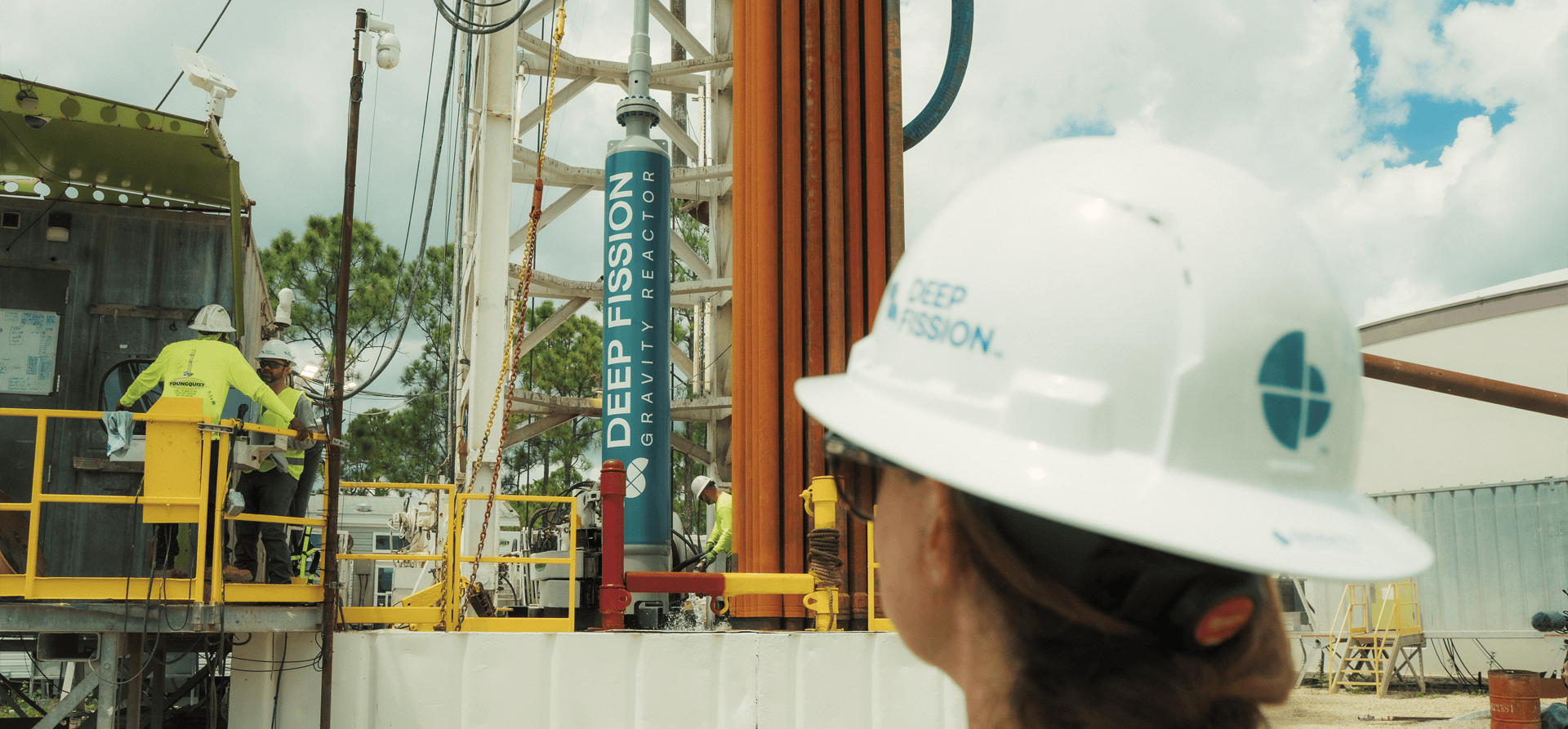
By Liz Muller, Co-founder and CEO, Deep Fission
One of the questions I hear most often is a simple one: can you actually drill a borehole large enough for a nuclear reactor?
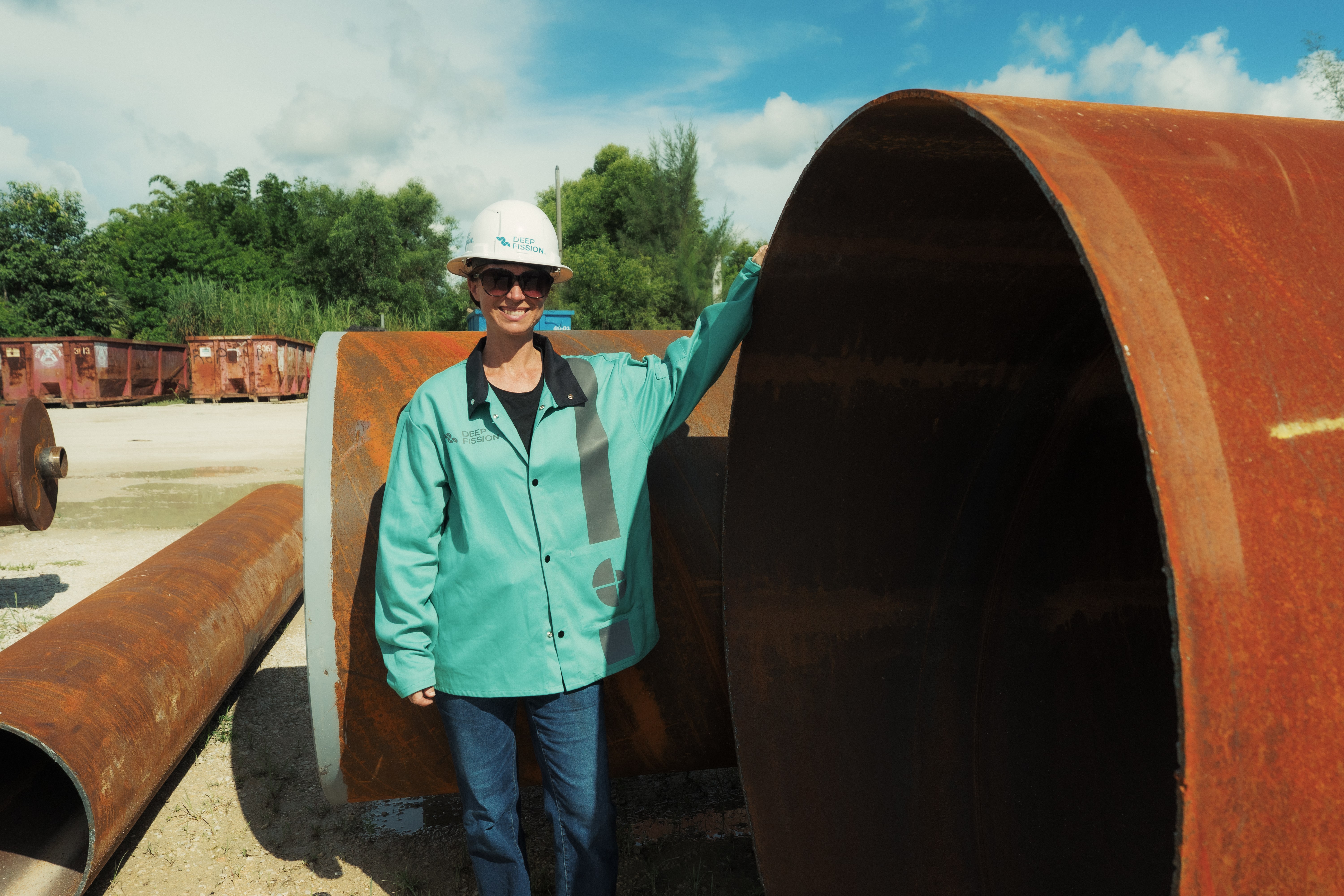
It's a fair question. Most people picture oil and gas wells: narrow holes, just wide enough to carry hydrocarbons to the surface. Next to those, a hole 30 to 50 inches across and a mile deep (large enough to house our Gravity™ Nuclear Reactor) sounds like something entirely new.
It's not.
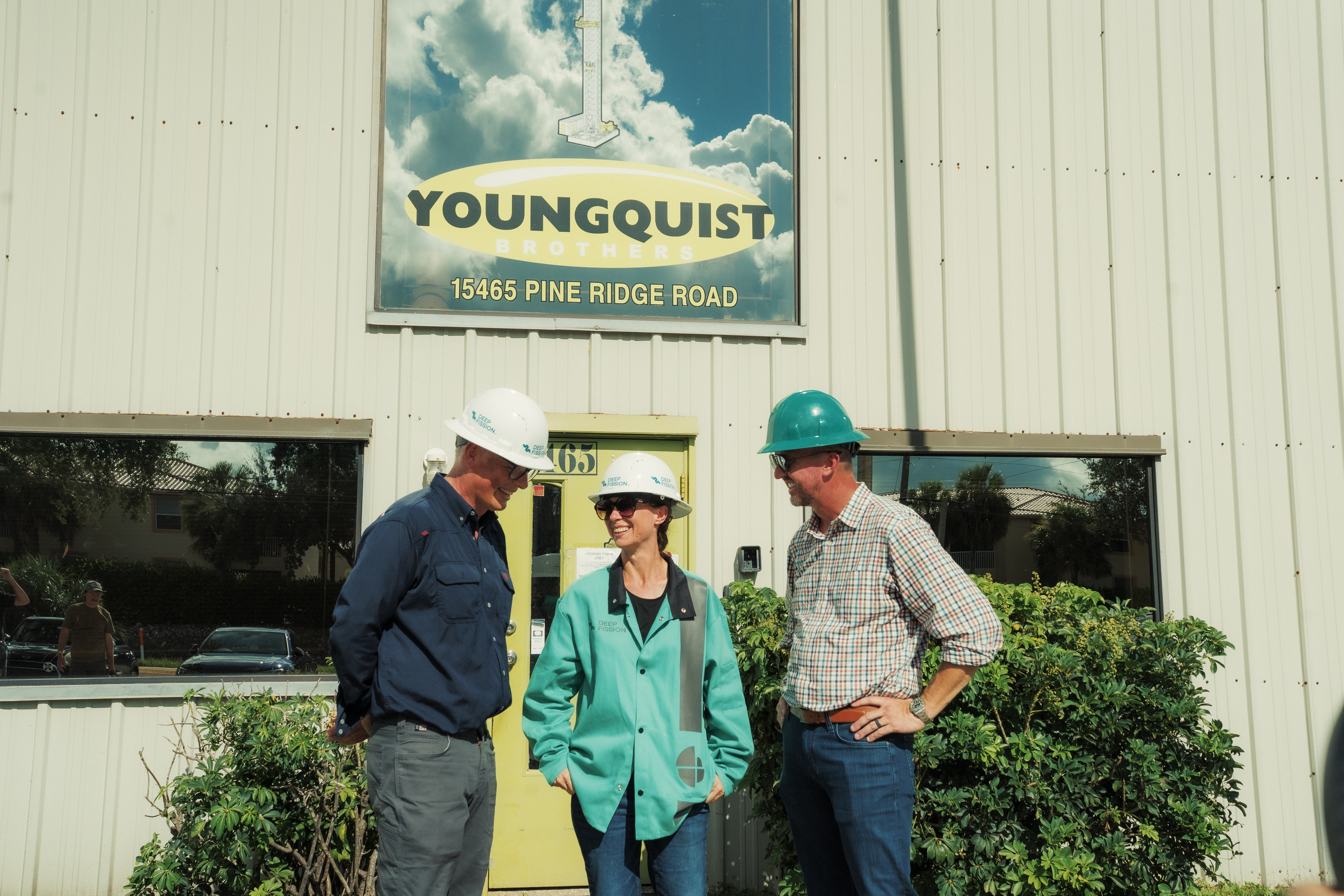
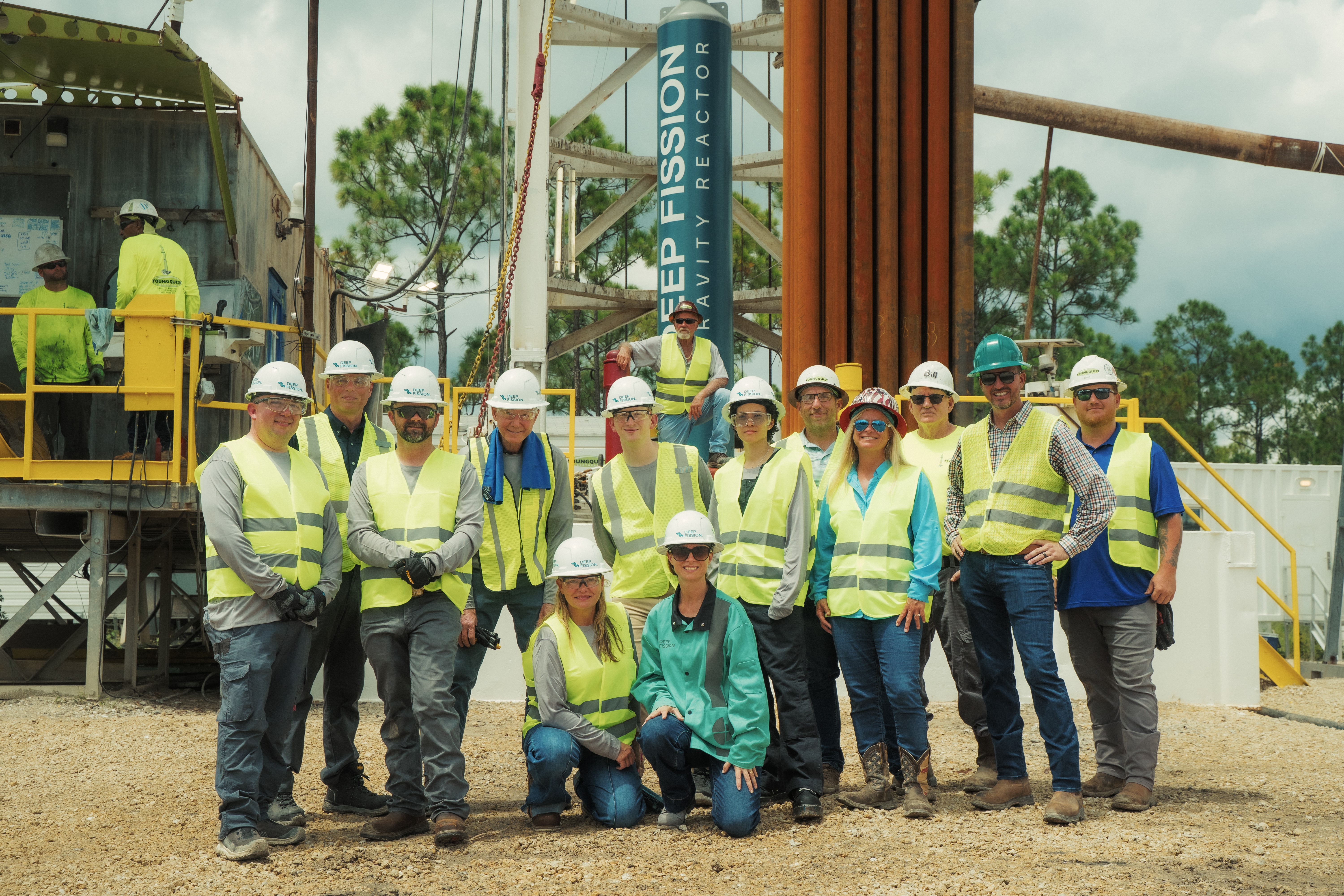
In early September I flew to Florida to visit Youngquist, a driller with decades of experience in large-diameter and Class I deep injection wells. A week before that, their team made an offer:
They had a 34-inch-wide borehole standing at one of their wellsites. If we could get a prototype reactor canister to Florida, their crew would run it in the hole.
So we shipped the canister and booked our flight. I was eager to see this up close. Deployment isn't something we hand off and read about in a report; it's the center of this company.
On September 3rd, their crew fixed the canister to drill pipe on one of their rigs, ran it about a hundred feet downhole, and pulled it back to surface. A 30-inch canister into a 34-inch hole, with two inches of clearance the whole way around. And we accomplished this in just one week from first mention to demonstration.
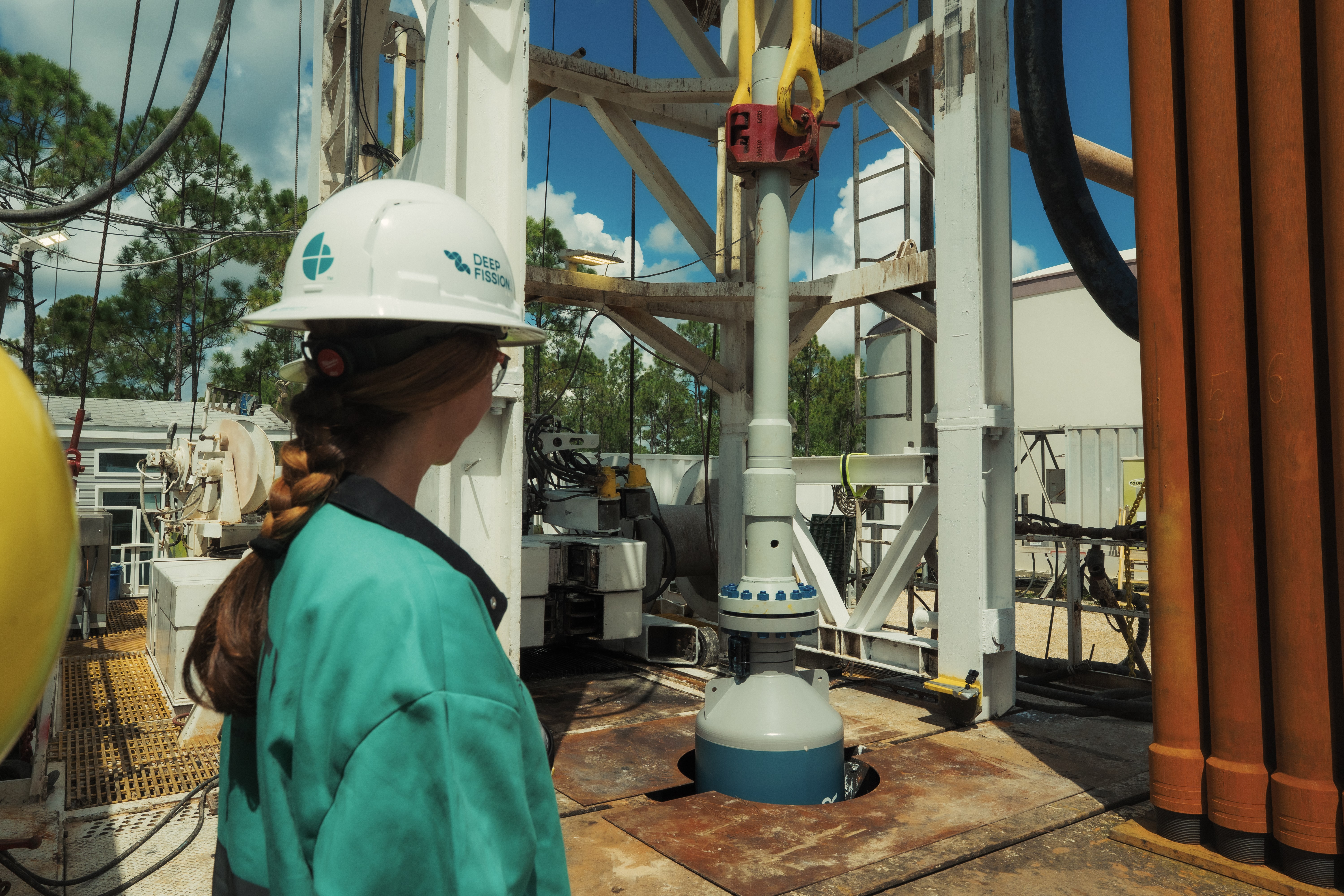
I want to be precise that this was a deployment demonstration, not a drilling program. The canister carried no fuel, the hole was already there, and a hundred feet is a test of rig mechanics, not depth.
But that's exactly what makes it worth sharing. For Youngquist, a wide borehole isn't an event; they had an extra one standing on their site. They staged it and crewed it within a week. That's the pace Deep Fission is built around.
Industrial wide-borehole drilling has an origin story most people don't expect: a significant anchor customer was nuclear. When the Limited Test Ban Treaty moved American nuclear testing underground in 1963,1 every underground test needed a wide, deep emplacement hole. The largest were six to ten feet across and 4,000 to 6,000 feet deep,2,3 and the drilling industry scaled to provide them. According to J. H. Allen, writing in the Australian Oil and Gas Review in 1968, annual large-hole footage grew from roughly 5,000 feet in 1959 to 117,000 feet in 1967.2
By 1968 five separate contractors ran rigs rated for 120-inch holes beyond 2,000 feet, and they set casing too: Allen reports a 54-inch string weighing about five million pounds run to 5,600 feet.2
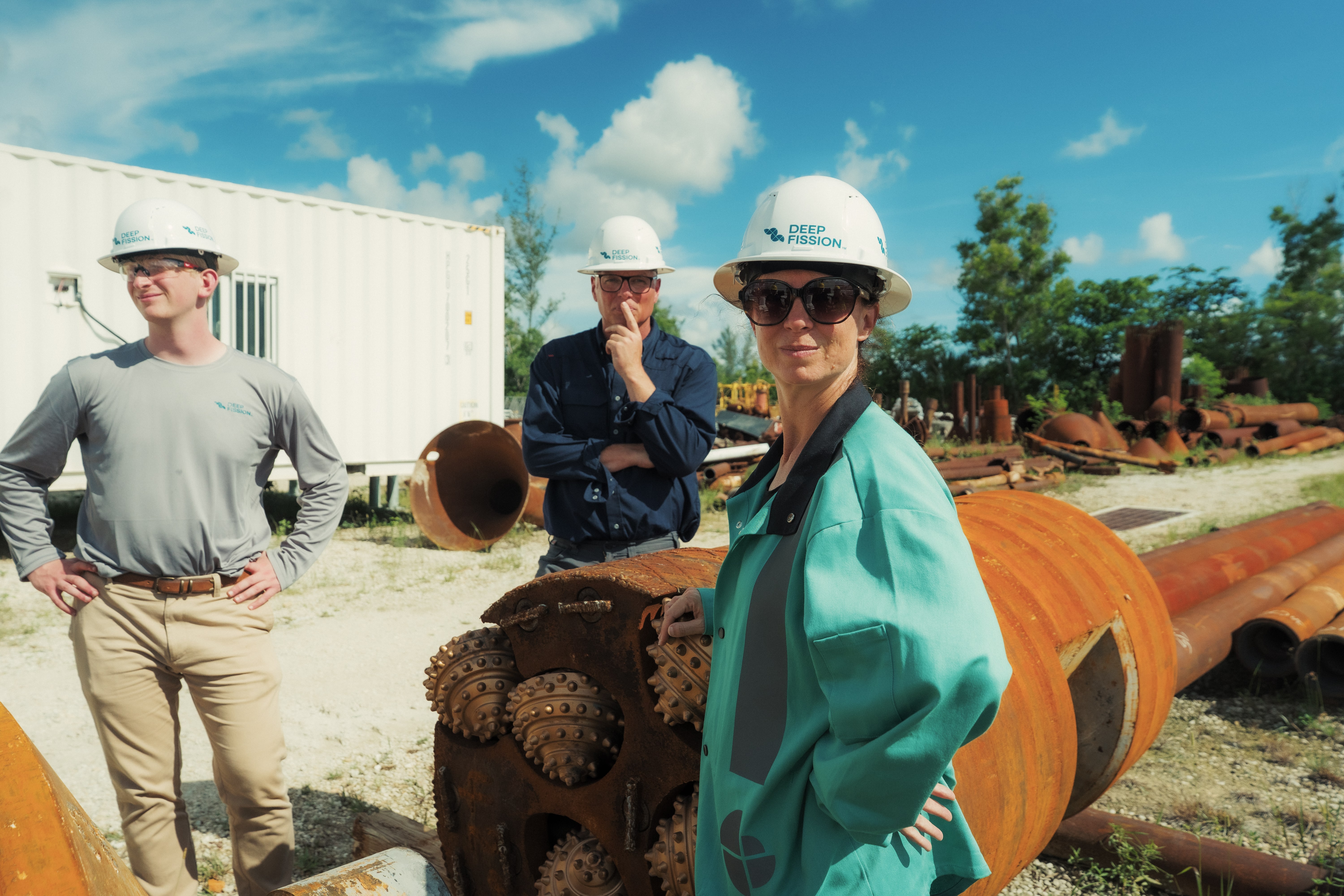
These weren't laboratory demonstrations. They were working wells, drilled with rotary rigs and oilfield crews, using a circulation method still in commercial service today. The capability never disappeared, but the customer changed. In Florida, that customer became municipal utilities. The method was on Florida's deep disposal wells by 1974,4 and state records from the Florida Geological Survey and the Southwest Florida Water Management District show Youngquist building cased, permitted wells year after year since 1978.5,6
Sixty years later, the wide borehole's next customer is nuclear again.
We took the reactor underground for three reasons: to replace much of a traditional plant's above-ground construction with a drilling program, to draw on a drilling industry that has built wells of this size for sixty years, and to take advantage of the passive pressure and protection that come with depth.
Our design is intended to reduce complexity. The surrounding geology and hydrostatic pressure should reduce the need for certain capital-intensive systems that would otherwise be built, powered, and maintained above ground at a traditional nuclear plant.
We aren't inventing new nuclear physics or new drilling technology. We're prioritizing deployment innovation over reactor invention, integrating proven expertise, discipline by discipline, with a goal of delivering firm, commercial power from a mile underground.
Our first commercial well will carry first-of-a-kind costs, the way first wells usually do. That isn't the number I watch. Drilling is a repeated operation, and repeated operations have learning curves: crews get more efficient, bits last longer, and plans start to standardize. All this should mean, over time, our costs improve.
We've already started down that curve: our first ~8-inch-wide data acquisition well in Kansas is already complete to about 6,000 feet, with a second, 42-inch-wide, 36-inch casing program well to 2,500 feet planned for later this year to demonstrate deep deployment of major components.
Yes, we believe you can drill a mile-deep hole big enough for a nuclear reactor. People have drilled holes this wide, and holes this deep, for over sixty years. The step from that record to our well is a matter of degree. The only part of this that's new is the technology we lower into it.
Forward Looking Statements
This article contains forward-looking statements regarding Deep Fission’s planned drilling, testing and deployment activities and the anticipated benefits of its approach. These statements are subject to technical, regulatory, licensing, financing and other risks and uncertainties that could cause actual results to differ materially. Additional information regarding these risks is included in Deep Fission’s filings with the SEC. Forward-looking statements speak only as of the date of this article, and Deep Fission undertakes no obligation to update them except as required by law.
Forward-looking statements speak only as of the date of this article. Deep Fission undertakes no obligation to update any forward-looking statements, except as required by law.
Sources
1. Treaty Banning Nuclear Weapon Tests in the Atmosphere, in Outer Space and Under Water (Limited Test Ban Treaty). Signed Moscow, August 5, 1963; entered into force October 10, 1963. U.S. National Archives, Milestone Documents; U.S. Department of State, Office of Treaty Affairs.
2. Allen, J. H. "Drilling Large Diameter Holes." Australian Oil and Gas Review, June 1968. U.S. NRC ADAMS accession ML040480471.
3. Allen, J. H. "A Review of Reverse Circulation Air Lift Methods for Big Hole Drilling." Society of Mining Engineers preprint 76-AU-67; reprinted in World Mining, January 1976. U.S. NRC ADAMS accession ML040480471.
4. Sutcliffe, H. "Hydrologic Data from a Deep Test Well, City of Sarasota, Florida." U.S. Geological Survey Open-File Report 79-1275, 1979. DOI 10.3133/ofr791275.
5. Florida Geological Survey. Borehole database, records with driller of record Youngquist Brothers, Inc. Accessed July 2026. 213 records, 1983 to 2026.
6. Southwest Florida Water Management District. Well Construction Permits database, records with contractor Youngquist Brothers. Accessed July 29, 2026. 279 records, 1978 to 2012.
Company News